
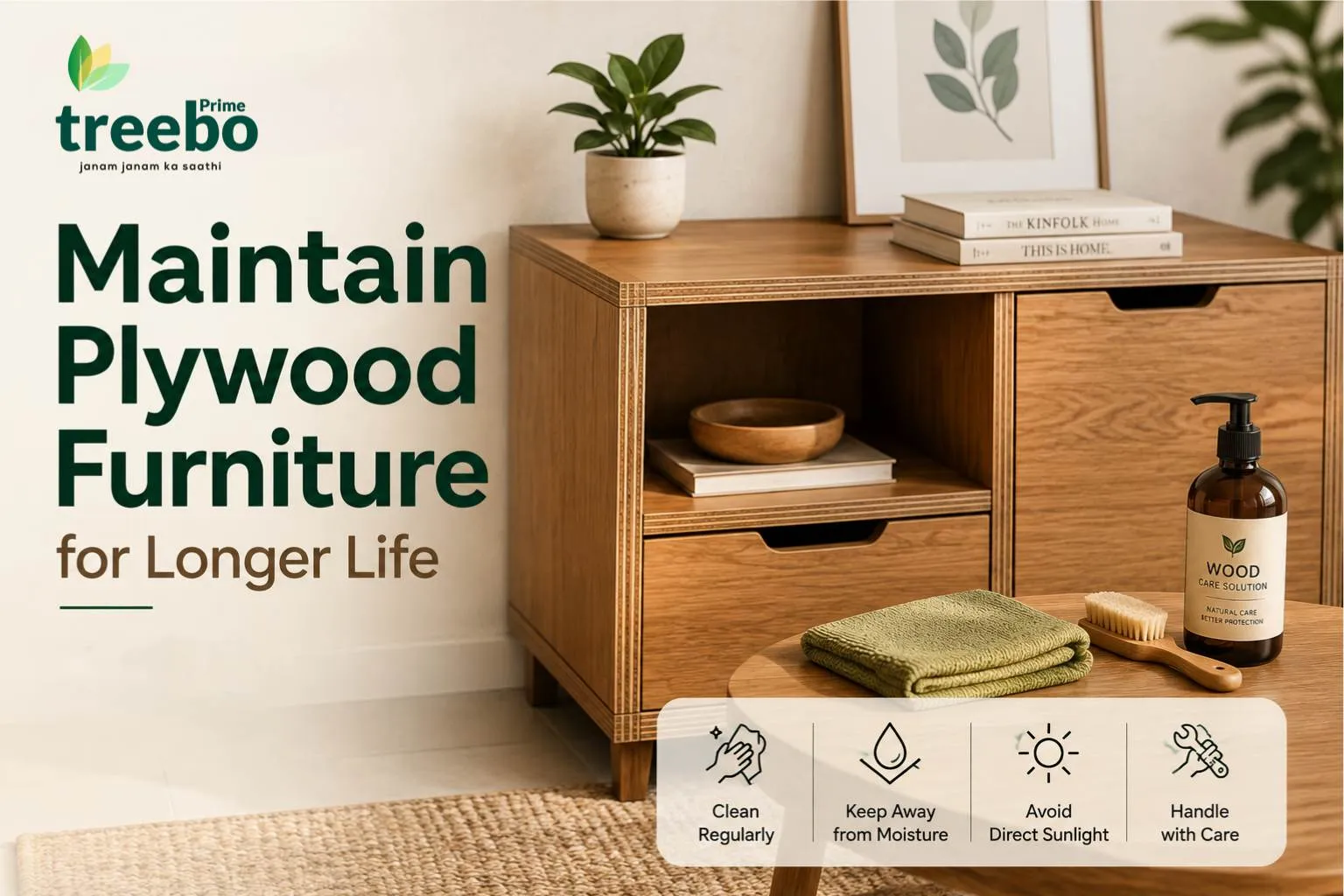
To maintain plywood furniture for a longer life doesn’t require expensive products. Just a few consistent habits will keep it looking and performing its best for years and decades.
Plywood furniture is one of the best investments you can make for your home or office. It’s strong, versatile, and cost-effective. But like any investment, it rewards a little care with a long life. Ignore it, and even premium-grade plywood can warp, swell, or deteriorate before its time.
Here’s how to do it right.
1. Keep Moisture Away – Always
Moisture is plywood’s biggest enemy. Even BWR (Boiling Water Resistant) and BWP-grade plywood can degrade if water is allowed to sit on the surface for extended periods.
What to do:
- Wipe spills immediately – don’t let water pool or soak into joints
- Use waterproof coasters under glasses and plants
- In bathrooms or kitchens, ensure proper ventilation to control humidity levels
- Apply a water-resistant sealant or wax coat to exposed plywood edges, especially in wet-prone zones
Treebo tip: The right material is the first line of defense.
If you’re furnishing areas near water sources, always select the appropriate grade of plywood from the beginning. Use MR grade for low-moisture areas and BWR for higher-humidity environments.
2. Protect Against Termites and Borers
Termites can silently hollow out furniture from within before you even notice the damage. Plywood that has been treated for borer and termite resistance holds up far better, but treatment alone is not a permanent guarantee.
What to do:
- Inspect furniture joints and corners periodically – fine sawdust or hollow sounds when tapped are early signs
- Use termite-resistant paint or lacquer for older, untreated pieces
- Keep furniture slightly away from walls to improve airflow and prevent moisture buildup (a common entry point for termites)
- If you spot an infestation early, treat immediately rather than waiting
3. Clean It Right – Gently
Harsh cleaning products and abrasive scrubbers do more harm than good on plywood surfaces, particularly laminates and veneers.
What to do:
- For everyday dust, a dry or slightly damp microfiber cloth works best
- For stubborn stains, use mild soap diluted in water; wring the cloth well before wiping
- Avoid ammonia-based cleaners, bleach, and heavy-duty sprays
- Never steam-clean plywood furniture; the heat and moisture combination will cause swelling and delamination
4. Protect Surfaces from Heat and Scratches
Direct heat from hot vessels and sharp edges from daily use leave marks that are hard to reverse on plywood surfaces.
What to do:
- Always use heat-resistant mats or trivets under hot pots, pans, or appliances
- Use felt pads or rubber bumpers under decorative items to prevent scratches
- For worktops and study tables, consider a glass or acrylic overlay for everyday protection
- Keep sharp objects, keys, and tools away from finished surfaces
5. Maintain the Finish Regularly
The finish on your plywood furniture, whether paint, laminate, veneer, or polish, is its first line of protection. Once the finish breaks down, the wood underneath becomes vulnerable.
What to do:
- Reapply furniture polish every few months to maintain shine and surface protection
- For painted furniture, touch up chips and scratches before moisture or air gets into the exposed area
- For veneer finishes, use a veneer-safe conditioner to keep the surface from drying and cracking
- Sand and reseal raw or unfinished plywood edges, especially on shelves and wardrobes that see daily use
6. Don’t Overload or Stress the Joints
Even the strongest plywood has load limits. Overloading shelves or putting uneven stress on joints leads to warping and loosening over time.
What to do:
- Distribute weight evenly across shelves
- Check and tighten screws, hinges, and fittings every 6–12 months
- Reinforce long, unsupported shelves with a central pillar or back panel
- If a joint begins to open up, re-glue it immediately with a quality wood adhesive – don’t let it worsen.
7. Control the Room Environment
Plywood reacts to its environment. Extreme heat, excessive cold, or drastic humidity swings cause expansion and contraction over time. This leads to warping.
What to do:
- Avoid placing plywood furniture directly in front of air conditioners or heaters
- In rooms with very dry air, a small humidifier helps stabilize the environment
- In naturally damp rooms, a dehumidifier or silica gel packs near furniture reduce moisture exposure
The Bottom Line
Plywood furniture built from quality material lasts a long time on its own. When maintained properly, it can outlast most alternatives at its price point. The key is early action: clean promptly, inspect regularly, and fix small problems before they become big ones.
At Treebo Ply, we build our plywood to stand against real-life conditions. But the life you get out of your furniture ultimately depends on the care you put in. Start with the right material, and the rest is easy.
Looking to upgrade to plywood that’s built to last? Explore Treebo Ply→